Cross-Chain Transfer
Omni-Layer Protocol: True “Any Chain, Any Token” Seamless Cross-Chain Experience
Overview
Traditional cross-chain bridges are broken: 10-30 minute delays, painful slippage, and questionable security. PicWe’s Omni-Layer Protocol solves this. We built our own cross-chain infrastructure from scratch—no dependency on third-party bridges, no compromises. The result: sub-minute transfers, near-zero slippage, and a self-balancing liquidity system that keeps everything running smoothly.
Core Technical Metrics
| Metric | Traditional Bridges | Omni-Layer Protocol |
|---|---|---|
| Cross-Chain Latency | 10-30 minutes | 15-30 seconds |
| Trading Slippage | 0.5% - 3% | < 0.1% |
| Capital Utilization | < 30% | > 90% |
| Security Model | Single trust assumption | Economic Incentives + Cryptographic Proof |
Protocol Architecture
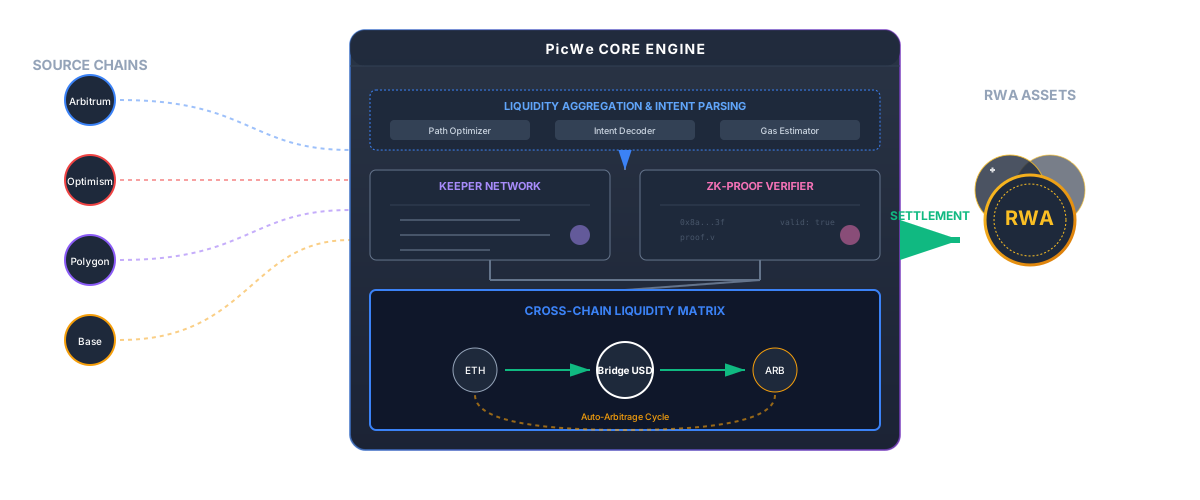
Four layers. Each one does its job. Together, they make cross-chain just work:
Layer 1: User Interaction
Multiple ways in. Pick what works for you:
- Wallet Connect — MetaMask, Rainbow, whatever you use
- DApp Frontend — Clean UI, just works
- SDK — Developers: npm install and go
- API — Institutions: high-frequency ready
Layer 2: Omni Relayer Layer — Core
The brain of the protocol. Three tightly integrated components work together to make cross-chain feel like single-chain:
Intent Resolution Engine
Users tell us what they want. We figure out how to make it happen—fastest route, best price, lowest risk:
| Component | Function |
|---|---|
| Intent Parser | Parses user intent, identifies source chain/target chain/asset type |
| Path Optimizer | Intelligent routing algorithm, calculates optimal execution path |
| Price Oracle | Multi-source aggregated oracle ensuring price accuracy |
| Risk Assessor | Real-time risk assessment protecting user assets |
Native Cross-Chain Bridge
We don’t outsource our bridge. We built it:
- Our Own Infrastructure — No Wormhole. No LayerZero. No third-party risk.
- Burn/Mint Model — Source chain burns, target chain mints. Clean and simple.
- Signed Messages — Every cross-chain message is cryptographically verified.
Keeper Network
The muscle behind liquidity balance. Protocol-operated and community-powered Keepers continuously monitor and rebalance pools across all chains:
| Module | Responsibility |
|---|---|
| Balance Monitor | 24/7 monitoring of pool deviations across all chains |
| MEV Protector | Front-running prevention, user transactions stay protected |
| Arbitrage Engine | Automated rebalancing through profitable arbitrage |
| Profit Sharing | Keepers earn rewards, protocol captures value |
Layer 3: Liquidity Aggregation
DEX Integration
Best price, every time. We route through:
- Uniswap V4 / Curve / Balancer
- 1inch / Paraswap / 0x Protocol
- Smart routing picks the winner automatically
WeUSD Self-Balancing Pool Matrix
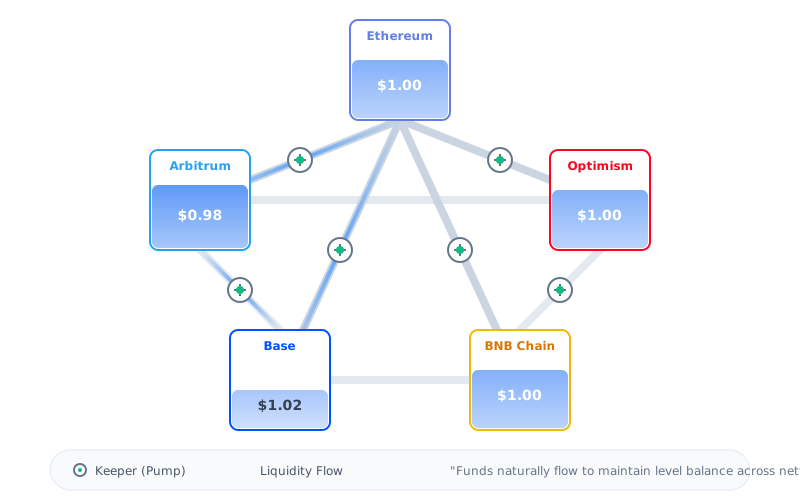
Liquidity pools on every chain, connected through our bridge infrastructure. When prices drift, Keepers step in—buy low on one chain, bridge over, sell high on another. The result: prices stay pegged, liquidity stays balanced, and everyone wins.
Layer 4: RWA Collateral
Every WEUSD is backed 1:1. Real assets, real value:
- USD & USD-equivalent stablecoins
- Real Estate
- Commodities
- Concert Tickets & Events
- Art & Collectibles
- Carbon Credits
- IP Rights
Core Workflow
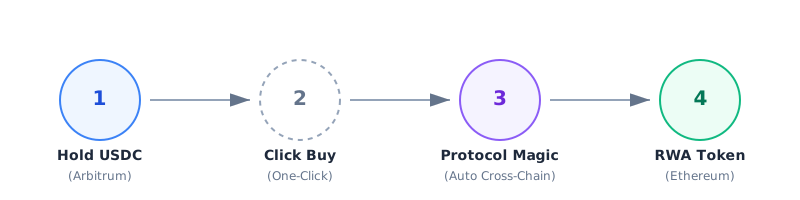
Real example: Buy concert ticket RWA on Ethereum using ETH on Arbitrum. One click. Done.
Step 1: Intent Submission
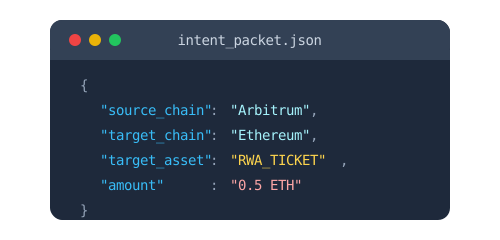
One signature. That’s it. You don’t need to understand bridges, routing, or gas estimation—we handle everything.
Step 2: Path Resolution & Optimization
The Intent Resolution Engine automatically executes:
- Parse Intent — Identifies source chain (Arbitrum), target chain (Ethereum), asset type
- Query Oracle — Retrieves real-time prices for ETH/USDC, WEUSD/USDC, RWA/WEUSD
- Calculate Optimal Path — Compares direct swap vs multi-hop routes, selects lowest slippage option
- Risk Assessment — Checks target chain liquidity depth, estimates gas costs
Step 3: Cross-Chain Execution
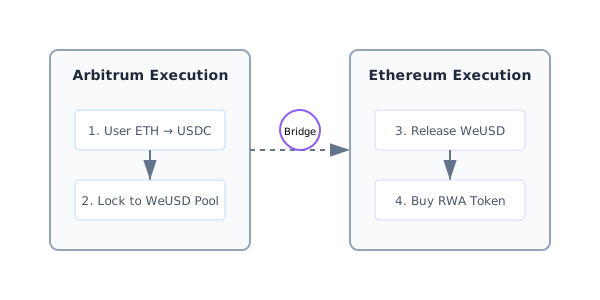
Atomic execution: All or nothing. No stuck funds. No partial fills.
Step 4: Asset Delivery
RWA tokens land in your wallet. Typically under 30 seconds for L2-to-L2, under a minute for L1 routes.
- No network switching
- No extra signatures
- No anxiety about “where’s my money”
WeUSD Self-Balancing Mechanism
This is what makes Omni-Layer different. We don’t just move tokens—we keep the entire multi-chain liquidity system in balance.
The Problem We Solved
Other protocols treat each chain as an island. Result:
- Popular chains have all the liquidity
- Smaller chains get drained
- Big trades cause massive slippage
Our Solution: Incentive-Aligned Rebalancing
Initial State (Imbalanced)
| Pool | WeUSD/USDC Ratio | Deviation |
|---|---|---|
| Ethereum Pool | 1 : 1.02 | +2% (premium) |
| Arbitrum Pool | 1 : 0.98 | -2% (discount) |
| Optimism Pool | 1 : 1.00 | Pegged |
Arbitrage Opportunity Detection
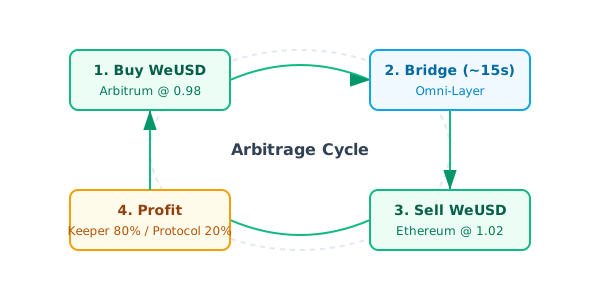
The system automatically identifies a 4% arbitrage opportunity:
- Buy 1 WeUSD on Arbitrum at 0.98 USDC
- Transfer to Ethereum via Omni-Layer Bridge
- Sell on Ethereum at 1.02 USDC
- Net Profit: ~4% (after gas and fees)
Keeper Execution
Keepers compete to capture the spread. They make money, pools get balanced. Win-win.
Result: Balanced Pools
| Pool | WeUSD/USDC Ratio | Status |
|---|---|---|
| Ethereum Pool | 1 : 1.001 | ✅ Balanced |
| Arbitrum Pool | 1 : 0.999 | ✅ Balanced |
| Optimism Pool | 1 : 1.000 | ✅ Balanced |
Why This Works
- Profit-Driven Balance — Keepers rebalance because it’s profitable, not because we ask them to
- Instant Response — Price drift detected? Arbitrage kicks in within seconds
- Attack-Resistant — Manipulation costs more than it’s worth
- Scales Naturally — More volume = more Keepers = tighter spreads
Supported Networks
Universal Interoperability Matrix
| From ↓ To → | BSC | Base | Arbitrum | HashKey | Plume | Movement |
|---|---|---|---|---|---|---|
| BSC | — | ✅ | ✅ | ✅ | ✅ | ✅ |
| Base | ✅ | — | ✅ | ✅ | ✅ | ✅ |
| Arbitrum | ✅ | ✅ | — | ✅ | ✅ | ✅ |
| HashKey | ✅ | ✅ | ✅ | — | ✅ | ✅ |
| Plume | ✅ | ✅ | ✅ | ✅ | — | ✅ |
| Movement | ✅ | ✅ | ✅ | ✅ | ✅ | — |
Execution Time
| Route Type | Typical Latency | Notes |
|---|---|---|
| L2 ↔ L2 | 15-30 seconds | Fastest path, optimized relayer |
| L2 ↔ L1 | 30-60 seconds | L1 finality adds overhead |
| EVM ↔ Movement | 1-3 minutes | Cross-VM verification required |
Fee Structure
| Fee Type | Amount | Notes |
|---|---|---|
| Protocol Fee | 0% | No protocol fee for cross-chain transfers |
| Source Chain Gas | Variable | Depends on network congestion |
| Target Chain Gas | Included | Protocol covers target chain execution costs |
💡 Why free? Keepers pay for rebalancing because they profit from it. We take a cut of that profit. You pay nothing.
Security Model
Defense in Depth
We don’t rely on a single security assumption. Multiple layers, each independently robust:
| Layer | How It Works | What It Stops |
|---|---|---|
| Cryptographic Verification | Every cross-chain message is signed and verified | Message forgery, replay attacks |
| Economic Incentives | Keepers profit from keeping things honest | Liquidity manipulation |
| Real-Time Monitoring | Continuous pool balance checks | Price depegging |
| Audited Contracts | Multiple top-tier audits completed | Code vulnerabilities |
Traditional Bridges vs Omni-Layer
| Risk | Traditional Bridges | Omni-Layer |
|---|---|---|
| Custodial Risk | ❌ Funds locked in bridge contracts | ✅ Burn/Mint model, no custody |
| Oracle Risk | ❌ Single oracle dependency | ✅ Multi-source price feeds |
| Single Point of Failure | ❌ One contract, one target | ✅ Distributed architecture |
| Liquidity Crisis | ❌ Run on the bridge | ✅ Self-balancing pools |
Use Cases
Cross-Chain RWA Purchase
Portfolio Rebalancing
Chase yield across chains without friction:
- High APY pool on Base? Move there.
- New IRO launching on HashKey? Be there first.
- Unique RWA on Plume? One click away.
Institutional Settlement
Built for serious volume:
- $10M+ single transactions — No problem
- < 0.1% slippage — Even at scale
- Programmatic API — Integrate with your systems
- Full audit trail — Compliance-ready
Technical Highlights
| What You Get | How We Built It | Why It Matters |
|---|---|---|
| Sub-Minute Transfers | Native bridge + optimized relayer | Stop waiting, start using |
| Near-Zero Slippage | Self-balancing pools + smart routing | Trade big without getting rekt |
| One-Click Cross-Chain | Intent engine handles complexity | Just say what you want |
| Atomic Execution | All-or-nothing transaction model | Your funds are never in limbo |
| Always-On Liquidity | Keeper network + economic incentives | Works 24/7, no downtime |
Key Facts
- Native WEUSD — Same token everywhere. Not wrapped, not synthetic. Real WEUSD.
- 1:1 Cross-Chain — Send 100 WEUSD, receive 100 WEUSD. No slippage on transfers.
- Our Infrastructure — We built our own bridge. No third-party dependency.
- Full Reversibility — Move your WEUSD anywhere, anytime, in any direction.
Next Steps
- IRO — Use WEUSD to participate in RWA initial offerings
- Origin Mincast — Mincast RWA tokens with WEUSD
- Invest — Deposit WEUSD into yield pools for stable returns