Mincast & Melt
The two fundamental operations of Origin Mincast
Overview
Origin Mincast has exactly two operations:
| Operation | Action | Result |
|---|---|---|
| Mincast | Deposit WEUSD | Mint new RWA tokens |
| Melt | Burn RWA tokens | Receive WEUSD |
Both operations execute at the current algorithmically-determined price.
Mincasting Tokens
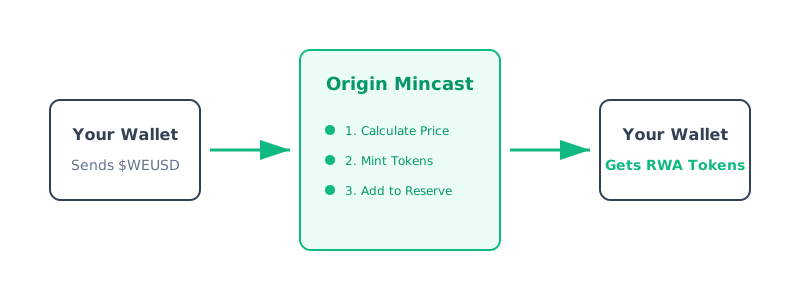
What Happens
- You send WEUSD to Origin Mincast
- Protocol calculates current price
- New RWA tokens are minted
- Tokens sent to your wallet
- WEUSD added to protocol reserve
Visual Flow
Melting Tokens
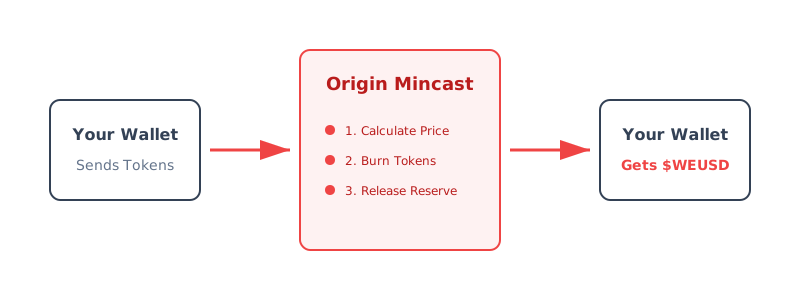
What Happens
- You send RWA tokens to Origin Mincast
- Protocol calculates current price
- Tokens are burned (destroyed)
- WEUSD released from reserve
- WEUSD sent to your wallet
Visual Flow
Price Impact
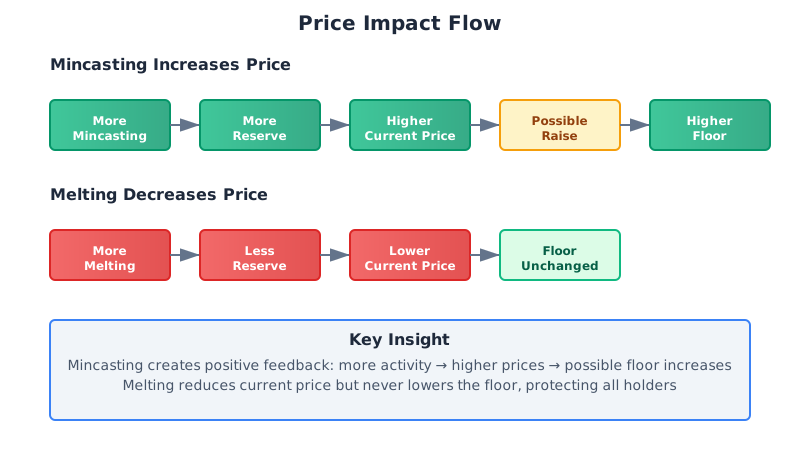
Mincasting Increases Price
When you mincast:
- Reserve grows (your WEUSD enters the pool)
- Supply grows (new tokens minted)
- Current price increases
- If threshold reached: Raise triggers, floor increases permanently
Melting Decreases Price
When you melt:
- Reserve decreases (proportionally)
- Supply decreases (tokens burned)
- Current price may decrease
- Floor price never decreases — your downside is always protected
The Raise Effect
When buying activity is strong enough:
- Protocol detects the threshold is reached
- Raise automatically triggers
- Value is locked from price premium into floor support
- Floor price permanently increases
This means: Active markets = Rising floor = Better protection for all holders
Slippage Protection
The desired parameter protects against unfavorable price movements:
For Mincasting
Set desired to the minimum tokens you’ll accept:
- If price moves against you, transaction reverts
- Protects against front-running
- Recommended: 0.5-1% below expected amount
For Melting
Set desired to the minimum WEUSD you’ll accept:
- Guarantees at least floor price
- Protects against rapid price drops
- Recommended: 0.5-1% below expected amount
Fees
| Operation | Fee | Destination |
|---|---|---|
| Mincast | ~0.3-1% | Treasury + Protocol |
| Melt | ~0.3-1% | Treasury + Protocol |
Fees contribute to:
- Treasury growth (supports floor price)
- Protocol sustainability
- Development funding
Example Scenarios
Scenario 1: Bullish Market
- Many users mincast tokens
- Supply increases
- Price rises
- Floor price rises (permanently)
- Early mincasters profit
Scenario 2: Bearish Market
- Users melt tokens
- Supply decreases
- Price falls
- Floor price remains unchanged
- Holders protected at floor
Scenario 3: Stable Market
- Balanced mincast/melt activity
- Supply stable
- Price stable
- Floor price gradually rises from fees
Best Practices
- Check Current Price — Review before mincasting/melting
- Set Slippage — Use
desiredparameter appropriately - Approve First — Approve token spending before transactions
- Gas Timing — Consider network congestion for gas costs
- Floor Awareness — Know the floor price for melt operations
Next Steps
- Dynamic Pricing — Understand how prices are calculated
- Floor Price — Learn about the protection mechanism
Last updated on