Risk Grading (R1-R5)
Standardized risk classification for RWA investments
Overview
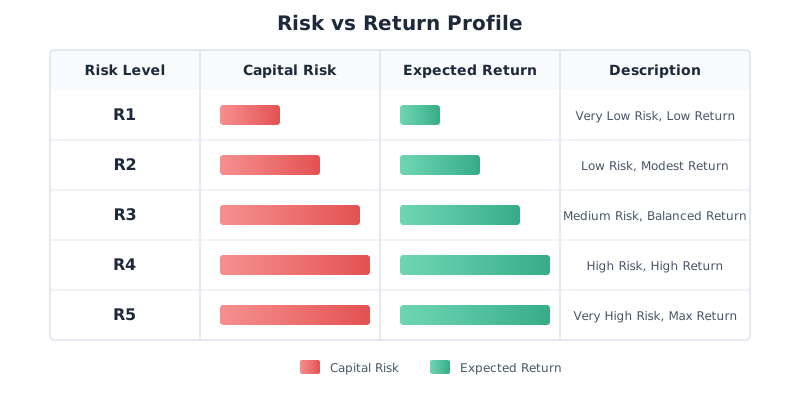
PicWe uses a five-level risk grading system (R1-R5) to classify RWA investments. This standardized framework helps investors understand the risk profile of each asset and make informed decisions.
Risk Levels
R1 — Very Low Risk
Capital Preservation Focus
| Characteristic | Description |
|---|---|
| Default Risk | Minimal |
| Liquidity | High |
| Volatility | Very low |
| Typical APY | 3-6% |
Examples:
- Government treasury bills
- Sovereign bonds (investment grade)
- Central bank deposits
- AAA-rated corporate bonds
Suitable for: Investors prioritizing capital safety above returns.
R2 — Low Risk
Stable Income Focus
| Characteristic | Description |
|---|---|
| Default Risk | Low |
| Liquidity | Moderate to High |
| Volatility | Low |
| Typical APY | 5-10% |
Examples:
- Investment-grade corporate bonds
- Secured lending products
- Senior debt tranches
- High-quality REITs
Suitable for: Income-focused investors seeking steady returns.
R3 — Medium Risk
Balanced Growth Focus
| Characteristic | Description |
|---|---|
| Default Risk | Moderate |
| Liquidity | Moderate |
| Volatility | Medium |
| Typical APY | 8-15% |
Examples:
- Commercial real estate
- Revenue-sharing agreements
- Infrastructure projects
- Mezzanine debt
Suitable for: Investors seeking balance between growth and stability.
R4 — High Risk
Growth Focus
| Characteristic | Description |
|---|---|
| Default Risk | Elevated |
| Liquidity | Lower |
| Volatility | High |
| Typical APY | 12-25% |
Examples:
- Growth equity
- Venture debt
- Emerging market assets
- Development projects
Suitable for: Experienced investors comfortable with volatility.
R5 — Very High Risk
Maximum Returns Focus
| Characteristic | Description |
|---|---|
| Default Risk | High |
| Liquidity | Low |
| Volatility | Very high |
| Typical APY | 20%+ |
Examples:
- Early-stage ventures
- Speculative projects
- Distressed assets
- Experimental protocols
Suitable for: Sophisticated investors prepared for potential capital loss.
Risk Assessment Criteria
Each RWA is evaluated on multiple factors:
1. Asset Quality
- Underlying asset value and stability
- Historical performance data
- Collateralization level
2. Issuer Credibility
- Track record
- Financial strength
- Operational capacity
3. Market Conditions
- Sector health
- Economic environment
- Regulatory landscape
4. Structural Protections
- Seniority in capital structure
- Covenants and triggers
- Insurance coverage
Risk Visualization
Matching with Investor Profiles
| Risk Level | Compatible Profiles |
|---|---|
| R1 | C1, C2, C3, C4, C5 |
| R2 | C2, C3, C4, C5 |
| R3 | C3, C4, C5 |
| R4 | C4, C5 |
| R5 | C5 only |
Conservative investors (C1) should only invest in R1 assets, while aggressive investors (C5) can access all risk levels.
Important Considerations
Floor Price Protection
All RWA tokens on Origin Mincast have floor price protection. However:
- Floor price ≠ purchase price
- Loss between floor and purchase is possible
- Higher risk = larger potential gap
Diversification
Consider spreading investments across:
- Multiple risk levels
- Different asset types
- Various issuers
Due Diligence
Risk grades are informational:
- Review asset details personally
- Understand specific risks
- Consider your financial situation
Next Steps
- Investor Profiles — Determine your risk profile
- Invest Overview — Start investing