Dynamic Pricing
How Origin Mincast calculates token prices algorithmically
Overview
Prices in Origin Mincast are not set by humans or market makers. They’re calculated by a mathematical formula based on real-time supply and demand — all backed by real reserves.
The Two Prices
Origin Mincast always displays two prices:
| Price | What It Means | Behavior |
|---|---|---|
| Current Price | What you pay/receive now | Goes up with buying, down with selling |
| Floor Price | Guaranteed minimum | Only goes up, never down |
Current Price = Floor Price + Market Premium
The market premium reflects current demand. When demand is high, premium is large. When demand is low, current price approaches floor.
How Prices Move
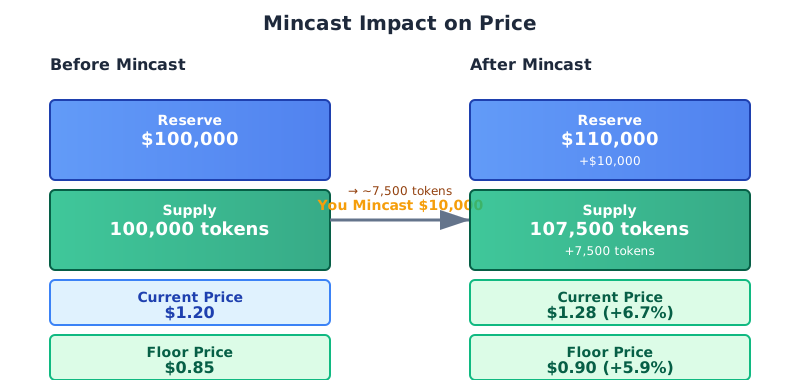
Mincasting (Buying) → Price Goes Up
When you mincast tokens:
- Your WEUSD enters the reserve pool
- New tokens are minted for you
- The reserve-to-supply ratio changes
- Both current price and floor price tend to increase
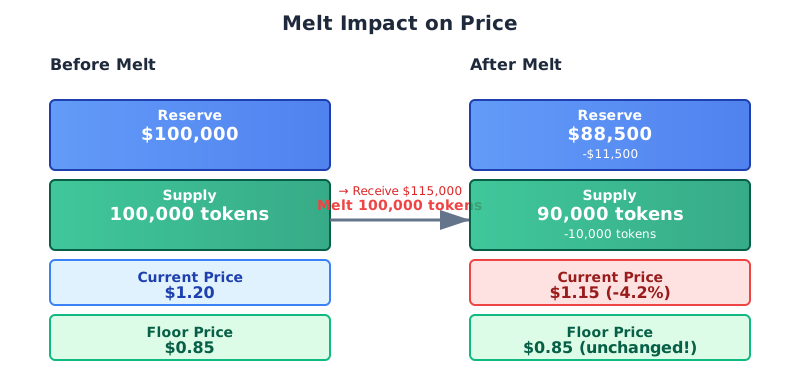
Melting (Selling) → Price Goes Down
When you melt tokens:
- Your tokens are burned
- You receive WEUSD from the reserve
- The reserve-to-supply ratio adjusts
- Current price decreases, but floor stays protected
The Bonding Curve
Origin Mincast uses a bonding curve — a mathematical relationship where price increases as supply increases.
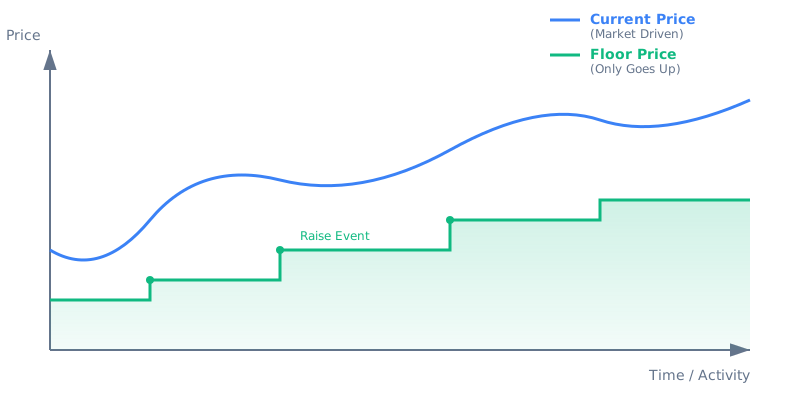
Key insight: The curve is designed so that:
- Buying moves you up the curve (higher price)
- Selling moves you down the curve (lower price)
- Floor acts as a bottom rail that never drops
Actual Transaction Price vs. Displayed Price
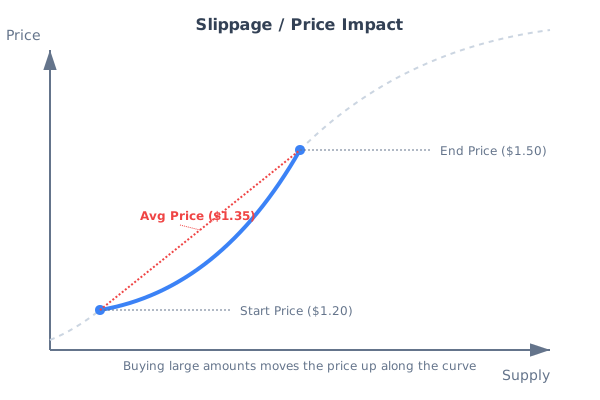
⚠️ Important: The price you see is the instantaneous price. Your actual transaction price may differ.
Why?
When you buy a significant amount, you’re not just buying at one price point — you’re buying along the curve:
Slippage Protection
To protect against unexpected price movements:
- Set a maximum slippage when trading
- Transaction reverts if price moves beyond your limit
- Recommended: 1-3% for normal trades
What Affects the Price?
| Factor | Effect on Current Price | Effect on Floor |
|---|---|---|
| More mincasting | ↑ Increases | ↑ May increase |
| More melting | ↓ Decreases | → Stays same |
| Raise triggered | ↓ May decrease* | ↑ Increases |
| Fees collected | ↑ Increases | ↑ Increases |
| APY distributed | ↑ Increases | ↑ Increases |
| Only burn | ↑ Increases | ↑ Increases |
| Realize | → No effect | → No effect |
* Note: When a Raise happens, the current price might temporarily dip because value is transferred from price premium to floor support. However, this is a feature — you’re getting more floor protection.
Raise Events and Price Resets
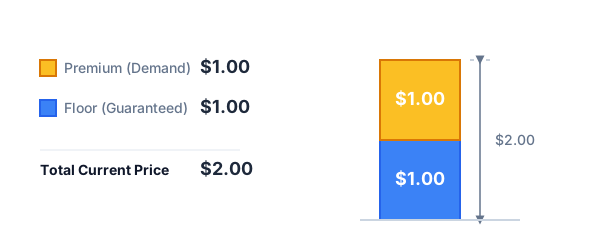
When buying activity reaches certain thresholds, a Raise event triggers:
Before Raise
After Raise
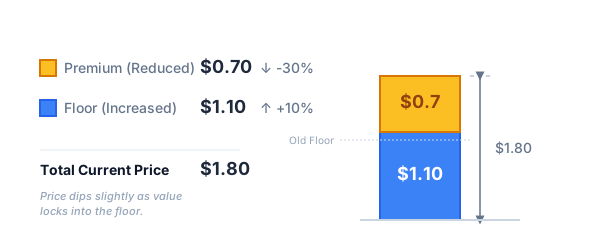
The trade-off: Slightly lower current price for significantly higher guaranteed floor. This is good for holders because:
- Your downside is now limited to $1.40 instead of $1.00
- The floor can never go back down
- Long-term value is locked in
True Market Price Discovery
Why Origin Mincast Pricing is Fair
| Property | How It Works |
|---|---|
| Algorithmic | No humans setting prices |
| Transparent | Formula is open source |
| Immutable | Parameters fixed at launch |
| Backed | Every price point has real reserves |
Comparison: Origin Mincast vs. Traditional Markets
| Aspect | Order Books | AMM DEX | Origin Mincast |
|---|---|---|---|
| Price Source | Bid/Ask | Pool ratio | Algorithm + reserve |
| Manipulation | Possible | Possible | Very difficult |
| Price Floor | None | None | Built-in |
| Large Trades | Need liquidity | High slippage | Predictable impact |
Summary
| Concept | Description |
|---|---|
| Current Price | Market-driven, can fluctuate |
| Floor Price | Reserve-backed, only increases |
| Bonding Curve | Mathematical price discovery |
| Raise Mechanism | Locks value into floor |
| Transparency | All calculations verifiable on-chain |
Origin Mincast pricing is designed to be fair, predictable, and protective — giving traders confidence that the market is honest and their downside is always limited.
Next Steps
- Floor Price Protection — Deep dive into floor mechanics
- Mincast & Melt — Start trading